

Stop Memorizing, Start Connecting: A Better Way to Teach Anatomy. Building subject-matter mastery through precision, connections, and real-world application.
If you've already downloaded lessons from our Musculoskeletal Anatomy series, I recommend adding this quick clarification to your materials, and grabbing the free updates.

In the Substack app, click the play button at the top of a post to start narration. To adjust audio speed, tap the playback bar at the bottom of your screen.
Contents
Expanded Offerings: Joint Anatomy
Musculoskeletal Intro (Excerpts)
Precision Glossaries: Accelerating Understanding, Retention, and Application for You and Your Students
Resource Portals: Optimized for Teachers and Providers
Recent Newsletters
The Wellness Professional’s Trusted Hub: Premium Tools from $12/month
Expanded Offerings: Joint Anatomy
If you’ve already downloaded our training material on musculoskeletal anatomy, I have one recommended clarification to share (below), plus additional free updates you are welcome to access.
If you haven’t worked with our material yet, but plan to study, write, teach or train, our anatomy resources are focused on real-world applicability — instantly elevating your ability to inform and inspire others. We reject useless factoids and overly dense, technical or complex language, instead prioritizing accuracy, clarity and practical usage. We don’t dumb anything down — we maintain absolute fidelity to the precise facts — but we also don’t use unnecessarily complex terminology or extraneous fluff. You immediately drop into a structured framework that lets you choose just what you need. All teachings are carefully documented and presented in such a way that they can stand alone as complete anatomy modules or be easily pulled apart to complement your existing material.
Whether or not anatomy is currently your strong suit or primary interest, these lessons are designed so you can jump in exactly where you want. They offer engaging, practical — and sometimes truly fascinating — insights that directly bear on the real-world, everyday experience of being in our bodies.
Clarification
While recently expanding the Musculoskeletal Intro lesson, I noticed a layout formatting issue in the previous version: synovial joints were inadvertently listed inside the sub-type breakdown rather than serving as the overarching category. To ensure absolute clarity in your materials, I’ve included an updated version of that section in the excerpts below so you can replace it in your materials. Full lesson updates are available as well, if desired.
Musculoskeletal Intro (Excerpts)
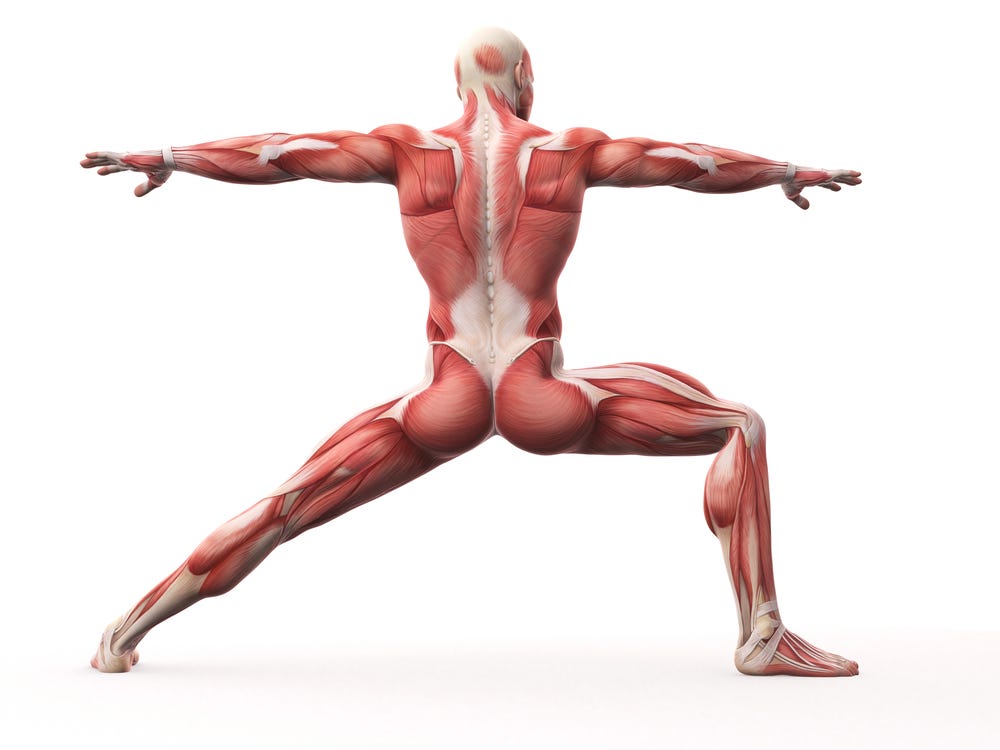
Separation is for Study Purposes Only
Although study resources imply that the human body is made of distinct parts, in reality, there are no separate “things” in the musculoskeletal form. As cultural anthropologist Gina Bria has said:
You don’t have some-600-odd muscles, as we’ve always been taught. You have a single muscle in 600 fascial pockets: one mind, one muscle, one fascial web.
Gina Bria
In other words, our body is formed by an inseparable continuum of connective tissue.
In this brief video, Leslie Kaminoff makes this ultra-clear, explaining that even with a scalpel and a cadaver, you don’t see a separate “thing” called a ligament. As he tells it, when you actually view the body with your eyes, a joint appears more as “complex origami” than the clean lines in anatomy drawings.
You may lend great insight in your teaching by being explicit that the body is not machine-like, and it doesn’t have separate “parts.” Rather, the body is an intelligent, complex and harmonious arrangement of interconnected structures that appears more as a “web.” Tom Myers expands on this point:
You are about 70 trillion cells, all humming in relative harmony; fascia is the 3-D spider web of fibrous, gluey, and wet proteins that hold them all together in their proper placement… Traditionally, ‘fascia’ as a medical term applies only to certain sheets of fabric within the body… [but] increasingly in scientific and research circles and among professionals worldwide, ‘fascia’ has a wider definition… You would need a large shopping cart to purchase all the materials you would need to make a body, but connective tissue manages to build all of them… The cornea of your eye, the enamel covering your teeth, and the valves of your heart are just three of an extraordinary array of connective tissues on display and at work in your body.
Tom Myers
Connective tissue is a prime example of the intelligent interconnection inherent in biological life. Because connective tissue is such a big subject, it’s discussed in its own lesson here. In this lesson, we introduce the foundational facts around bones, joints and muscles.
Another example of how anatomy teaching is beginning to recognize the interconnection in the body is with the phrase “kinetic chain.” This refers to the “interconnected network of muscles, ligaments, tendons and bones that [form] the chain of movement that propels you.” [Runner’s World]
If a human body takes a step forward, then moves to the side, and then jumps, you would see a fluid combination of biceps, quads, abs working together. That’s the kinetic chain in action: each part of the body is a link, and each link depends on the one before it and after it for top performance. As you probably remember from primary school, ‘The foot bone’s connected to the leg bone, the leg bone’s connected to the knee bone … ” and so on. Well, the kinetic chain is essentially that, but on a grander scale.
Dr. Jordan Metzl, Runner’s World
Overview
The musculoskeletal system is comprised of:
Bones
Joints and associated cartilage
Muscles
Connective Tissue (including ligaments, tendons, more cartilage and fascia)
Please note that bones, joints and muscles are also made from connective tissues, but the various structures have various functions.
The term skeleton refers to bones, joints and associated cartilage.
Functions

The musculoskeletal system:
Gives humans the ability to move using their muscular and skeletal systems.
Provides form, support and stability.
Protects vital organs.
Stores minerals such as calcium.
Produces new blood cells.
Moves blood and food.
Generates body heat.
Joints
Overview
Joints are not things. They are relationships. – Leslie Kaminoff
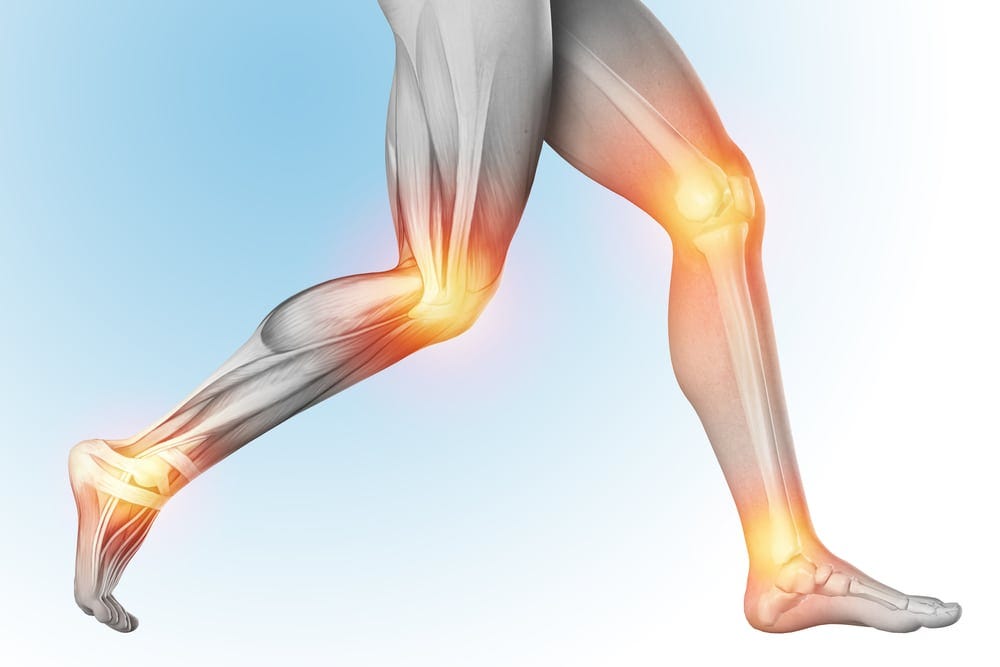
Joints are junctions or connecting points between bones (e.g., the knee connects the thigh bone and shin bone). They need to provide stability, weight-bearing, and fluid movement.
Connective Tissue Aspect of Joints
Every joint is enmeshed in a continuous web of fibrous connective tissue.
For example, ligaments connect the bones to each other, tendons connect muscle to bone, and cartilage covers the ends of bones and provides cushioning. [Sports Medicine]
As a result, functional or dysfunctional patterns in one area inevitably ripple across multiple parts of the body. This knowledge helps when considering the balancing of mobility and stability in tissues and joints since muscular balance and health of fascia are integral to mobility and to joint stability.
Teaching Application
To understand what muscle imbalances are and why they cause problems, the first key is to understand their effects on the balance of the joints. Most any joint in the body has a set of opposing muscles that have the opposite actions. But when we get a muscle imbalance, one of those muscles gets too strong, too tight, or too weak. As a result, the muscles around that joint can no longer interact with each other in a balanced way. This in term affects the functions of the joint and our range of motion. – Julie Gudmestad
Types of Joints
Our body has three primary types of joints, categorized by the type of tissue connecting the bones and the amount of movement they permit:
Fibrous — Bones bound tightly by dense tissue, allowing virtually no movement. No joint cavity. Example: sutures of skull.
Cartilaginous — Bones held firmly together by cartilage, permitting only very slight movement. Examples: intervertebral discs and pubic symphysis.
Synovial — Bones do not touch each other directly but instead are separated by a fluid-filled cavity and enclosed within a protective capsule, allowing for free movement. Examples below.
Synovial (Movable) Joints
Synovial joints are the most common joints in the body. They feature a protective joint capsule lined with a membrane that produces synovial fluid, which lubricates the joint to keep the cartilage healthy, moist, and moving smoothly.
Movement educators classify synovial joints into six distinct structural types:
Ball and Socket Joints — Provides the greatest mobility, allowing for a wide range of rotation and movement, including rotation. Examples: hip and shoulder joints.
Condyloid Joints — Highly versatile, allowing side-to-side and back-and-forth movement, but not permit rotation. Examples: jaw (temporomandibular joint) and fingers (knuckles).
Gliding Joints — Flat or nearly flat bone surfaces that allow bones to slide past one another. Examples: intervertebral facets of the spine, ankles, and wrists.
Hinge Joints — Act like a door hinge, permitting movement in only one plane to offer greater stability. Examples: knees and the main elbow joint (humoulnar joint).
Pivot Joints — Allow a bone to rotate or twist around a single axis formed by another bone. Examples: The top of the neck (atlantoaxial joint) and the forearm near the elbow (proximal radioulnar joint).
Saddle Joints — Shaped like a rider sitting on a saddle, allowing side-to-side and back-and-forth movement without free rotation. Example: The base of the thumb.
Teaching Applications
Movement is key. Movement of joints naturally circulates synovial fluid which nourishes the cartilage and keeps the joint capsule healthy.
Joint types inform healthy movement. In the notoriously demanding pose, Padmasana (Lotus Posture), both the hip and knee joints are deeply involved. However, those joints are built entirely differently. As a hinge joint, the knee has exceptionally limited rotational capability and relies on stability. Safe execution of Lotus requires the hips (highly mobile ball and socket joints) to possess adequate external rotation and range of motion. If the hips are tight, the rotational force is automatically transferred down the kinetic chain into the knee joint. Because the knee is not structurally designed to accommodate lateral or rotational forces, this torque stresses the collateral ligaments and meniscus, which could cause injury.
Precision Glossaries
Accelerating Understanding, Retention, and Application for You and Your Students

One of my favorite things about creating a site that optimizes my teaching and research is having highly efficient, accessible glossaries covering hundreds of subjects right at my fingertips. It has made my research time incredibly effective, and my ability to extract clear meaning from diverse sources has skyrocketed. Translating unfamiliar technical jargon into practical, meaningful takeaways in the moment changes everything — allowing anyone to significantly elevate their expertise in a single sitting.
As it turns out, being precise with terminology is half the battle when you’re building knowledge in a particular field — and it’s absolutely vital when bridging different fields. A key to mastery is gaining the ability to identify different terms that are being used for similar concepts and to efficiently spot nuanced differentiations. While we theoretically can always look up a word, the reality is that we tend to just gloss over many words, thinking we know them well enough when in fact the missing precision makes all the difference. Having a complete list of related terms with succinct definitions is a wildly underrated tool for subject-matter mastery.
If you have taught or researched for any length of time, you know from experience how differently the exact same terms can be defined. Even when technically correct, definitions vary wildly in their succinctness and practical helpfulness. In creating our glossaries, we rely on exceptionally clear, authoritative sources — stripping away opaque jargon and focusing entirely on streamlined, accessible language that efficiently communicates meaning for real-world understanding and application.
There is absolutely no need to force yourself to memorize endless terminology and unfamiliar definitions. You simply need a high-quality, reliable glossary for the subject at hand, which instantly uplevels your ability to master, retain, and apply knowledge across multiple disciplines and diverse sources.
👉 Go here for clear, practical definitions for 368 essential anatomy and physiology terms. To view any of the terms in context, simply select it to jump directly to the corresponding lesson.
Here’s an excerpt:
ANATOMY — The study of the shape, structure and relationship of parts of living things [source]
ANKLE JOINT — Connects the tibia (shin bone) and the fibula (the smaller bone next to the tibia) with the talus (ankle bone) and calcaneus (heel bone)
ANTAGONIST — The muscle that performs motion in the opposite direction of the agonist; it stretches passively
ANTERIOR — In anatomical terminology: in front
ANTERIOR TILT / ANTEVERSION / “HAPPY TAIL” — Tipping forward; in spinal and pelvic anatomy, refers to the pelvis and sacrum tilting forward, metaphorically “pouring” the pelvic bowl forward; will likely appear as excess low back curvature and buttocks sticking out
ANTIFRAGILE— Term coined by Nassim Taleb in a 2014 book of the same name to describe systems that benefit and grow stronger from stress, variability, disorder, or challenges, rather than merely resisting them; Taleb distinguishes it from resilience which resists stress to remain the same, while “the antifragile gets better and better” [source]
AORTA — Oxygen-rich blood leaves the heart via this (the largest artery) which branches into a network of smaller arteries
APOPTOSIS— Programmed cell death, a part of healthy cellular functioning
APPENDICULAR SKELETON— The bones attached or appended to the axial skeleton (spine, skull and rib cage); bones of the upper and lower limbs plus the shoulder and pelvic girdles
ARTERIES — The blood vessels that transport oxygen-rich blood and nutrients FROM THE HEART to the body
ATOM— Considered the building block of the material universe; made up of empty space, protons, neutrons and electrons
ATP— The primary energy source of animals and plants, produced by cells
👉 Continue
Resource Portals

Optimized for Teachers and Providers
At Wellness Resource Center, our rich resource portals are thoughtfully organized and optimized for teachers and providers. The Musculoskeletal System module is just a fraction of the full curriculum available to you from the Anatomy & Physiology Hub.
Musculoskeletal System & Movement

Musculoskeletal Intro
Connective Tissue & Fascia
Location & Movement Terms
Muscle Movement & Contraction
Joint Movement & ROM
Muscle Pairs
Hyperextension & Hypermobility
Musculoskeletal Intro
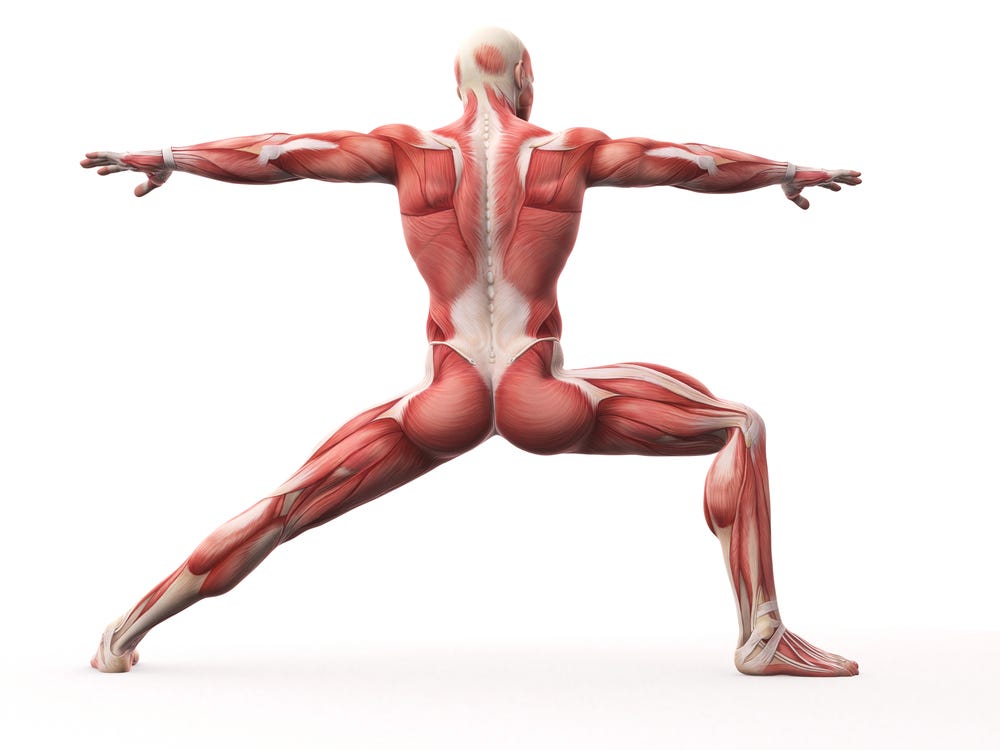
Objective: Be familiar with musculoskeletal terminology and foundational anatomy, focusing on the structure and function of bones, joints, and muscles to lay the groundwork for subsequent lessons that dig deeper into each.
Vocabulary: appendicular skeleton, axial skeleton, ball and socket joint, bone marrow, bone remodeling, bones, bursa / bursae, cardiac muscle, cartilage, collagen, collagen type I (Col-I), compact bone, hinge joint, joint, kinetic chain, muscle, musculoskeletal system, osteo, osteocalcin, skeletal muscle, skeletal system / skeleton, smooth muscle, spongy bone, synovial joint
Connective Tissue & Fascia
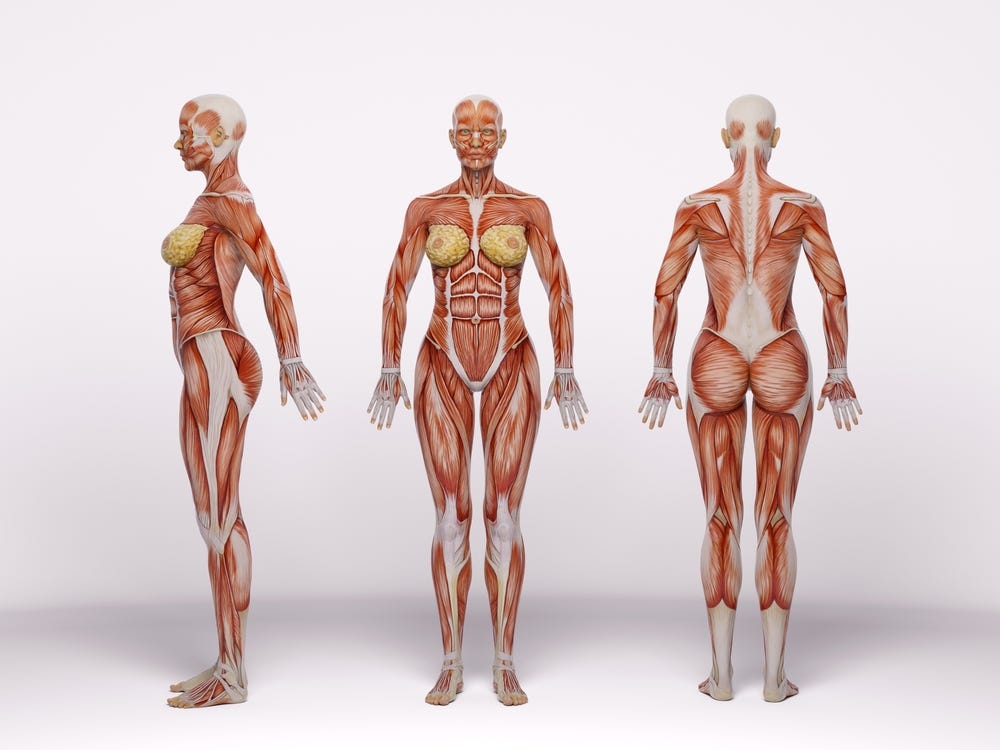
Objective: Understand the anatomy and physiology of connective tissue, the functions and significance of fascia, and techniques for applying this knowledge in teaching.
Vocabulary: bodily tissues, connective tissue, fascia, joint capsule, ligament, myofascia, tendon, tensegrity / biotensegrity
Location & Movement Terms
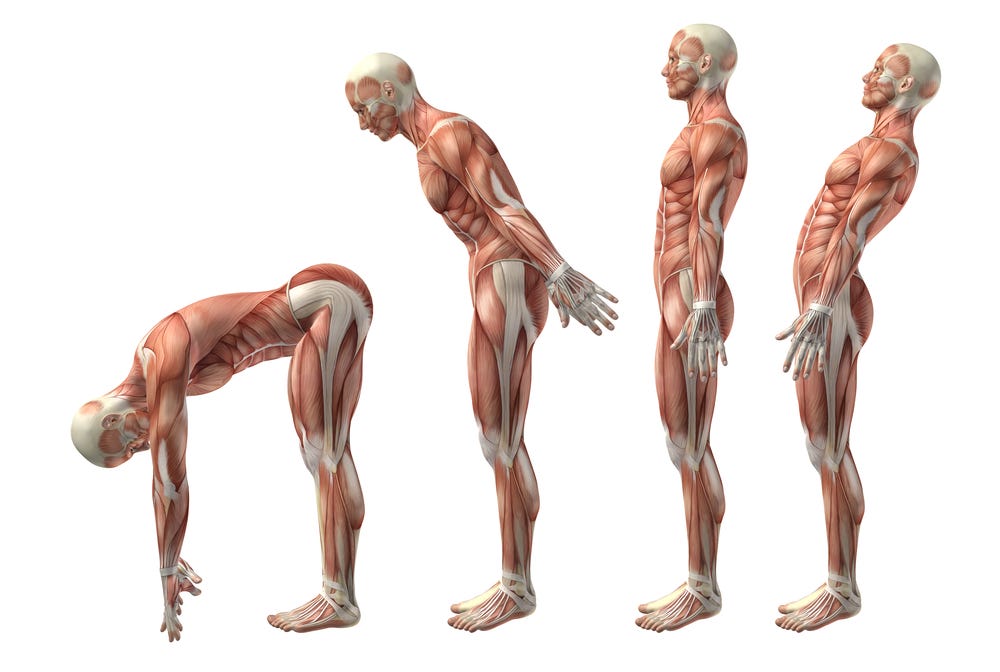
Objective: Be familiar with standard terminology to describe anatomical movements and directional locations to enable precise, universal language for body observation, cueing, and professional communication when needed.
Vocabulary: abduction, adduction, anterior, coronal plane, deep, distal, dorsal, extension, external rotation, flexion, frontal plane, horizontal plan, inferior, internal rotation, lateral, lateral rotation, medial, medial rotation, median plane, posterior, pronation, proximal, sagittal plane, scrub/scrubbing, superficial, supination, transverse plane, ventral
Muscle Movement & Contraction

Objective: Be aware of how muscles move and learn the related terminology.
Vocabulary: agonist, agonist-antagonist relationship, antagonist, concentric contraction, eccentric contraction, fixator muscle, insertion, isometric contraction, isotonic contraction, muscle contraction, origin, origin & insertion points, prime mover, reciprocal inhibition, stabilizer muscle, synergist muscles
Joint Movement & ROM
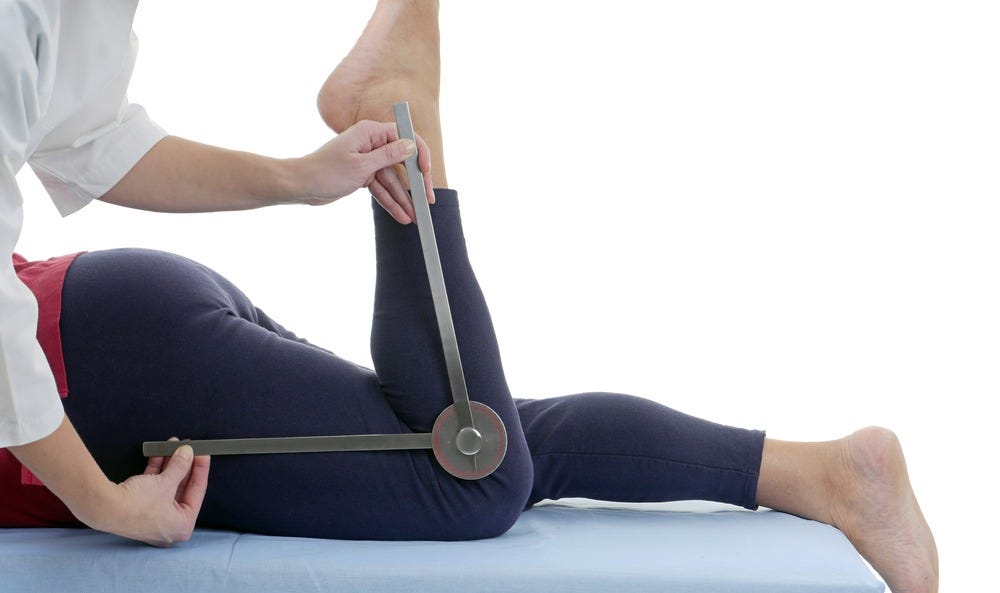
Objective: Be familiar with foundational terminology related to joint movements, factors that affect joint mobility, and the normal ranges of motion for various joints.
Vocabulary: active ROM (AROM), passive ROM (PROM), range of motion (ROM), ROM standards or norms
Muscle Pairs
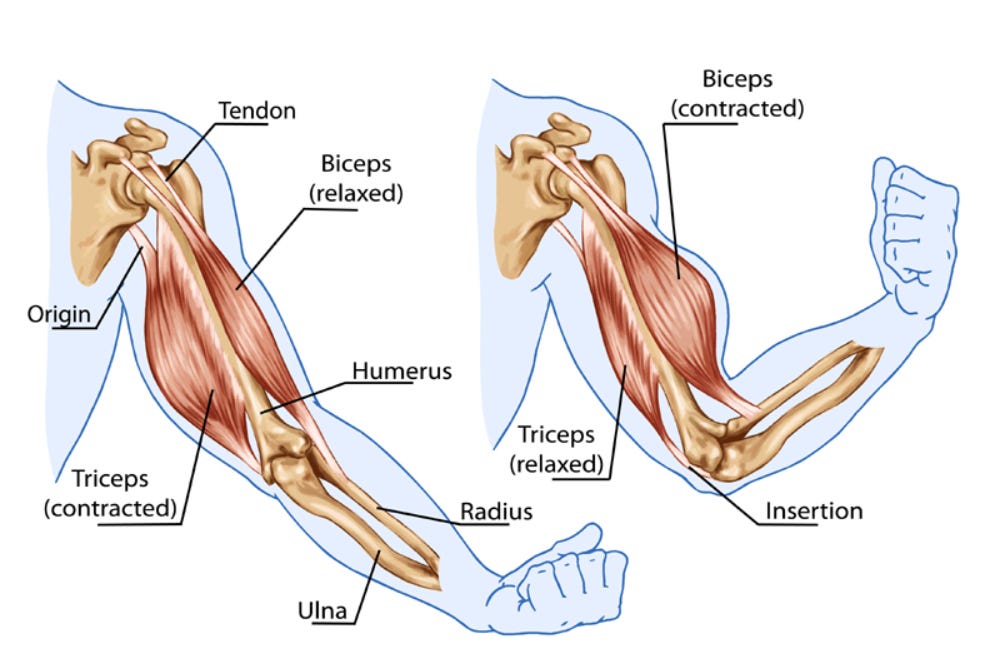
Objective: Be aware of key agonist/antagonist muscle pairs in major joint movements, and name poses that utilize them.
Hyperextension & Hypermobility

Objective: Be familiar with characteristics of musculoskeletal health and issues, particularly hyperextension and hypermobility, and teaching techniques to optimize joint health, especially for students with hypermobile joints.
Vocabulary: hyperextension, hypermobility / hypermobile joints, joint congruency, joint hypermobility syndrome
👉 Learn More: Workshop blueprint: When Flexibility Isn’t a Strength: Teaching Students with Hypermobility
Recent Newsletters
The Wellness Professional’s Trusted Hub: Premium Tools from $12/month

Stop building your classes, lectures, and handouts from scratch, and don’t risk your credibility on unverified, generic AI.
For over a decade, Wellness Resource Center and Yoga Teacher Central have served as the trusted back-office engine for teachers and wellness professionals. We vet and curate high-quality resources — never restricting your perspective, but expanding it with guided pathways and total transparency. You get instant access to evidence-based frameworks, wisdom teachings, and clinical summaries, plus the primary research to dig deep anytime you want. We handle the prep so you can lean into your true strengths: delivering individualized care and being fully present for those you serve.
What You Get
Evidence-Based Insights: Practical verifiable research delivered in context and designed for real-world application.
Flexible Learning Pathways: A comprehensive knowledgebase that adapts to your changing needs.
Turnkey Delivery Tools: Research summaries, lecture notes, workshop blueprints, and student handouts.
Total Freedom: Customizable content with lifetime, royalty-free distribution rights.
A Values-Aligned Community: A collaborative space for connection, inspiration, and shared growth.
Packages & Pricing
Choose from two membership tracks:
Providers & Teachers ($12/mo annual, $22/mo installment) — Perfect for planning, teaching, coaching, and consultation preparation.
Associates ($400 one-time pay) — Perfect for trainers and educators. Includes downloadable, customizable content with lifetime distribution rights for workshops, courses, and presentations across 500+ subjects.