

Materials for clearly presenting evidence-based results that ground and support your work. New slides and handouts on the evidence of harm from pharmaceuticals, polypharmacy, and overprescription.
Visually engaging PDFs, PowerPoint files, and images to communicate clinical research that grounds your work in solid, evidence-based results.

Dear friends and colleagues,
I’m writing to introduce a new collection of resources. Scroll down to view free samples.
Purpose
These marketing and communication materials help you clearly present evidence-based results that ground, support, and strengthen your work.
This is the kind of knowledge that moves people to action — so we need ways to effectively communicate it. These resources make it easier by providing practical, ready-to-use materials you can incorporate into marketing, consultations, training sessions, workshops, and other professional communications.
In particular, the new resources drawing on our vast evidence curations of pharmaceutical harms make it easy to provide reliable, verifiable information for informed decision-making. Because of widespread pharmaceutical influence (and its immoral business model), there’s a huge gap between the published factual evidence and what people actually know.
Getting the Resources
These materials are available to members in a variety of formats and can also be purchased in the store.


Why They’re Uniquely Useful
The resources we’ve developed for providers reflect significant effort on our part to ensure a professionally rigorous and reliable scope — often incorporating findings from dozens of studies involving thousands of participants.
At the same time, we remain focused on what matters most: presenting exceptionally clear, compelling evidence of impact.
You might assume this kind of material would be easy to find, but it isn’t. Here I discuss how pressures from establishment medicine can overshadow research on non-pharmaceutical interventions and here and here I outline practical ways to identify issues and overcome common challenges in evaluating research.
Earlier this month, I shared several newsletters highlighting the significance of clinical research and providing examples of visually engaging resources that put it into practical use.
In this post and this post, I made the case that research on yoga and other non-pharmaceutical interventions is enormously significant.
Here, I expressed that the same principles apply to the harms from pharmaceuticals. I focused on separating factual information about drugs from the people who use them, in order to remove unnecessary barriers to sharing vital knowledge with those who can benefit.
Why Focus on Pharmaceutical Harms?
I’d like to expand on why — despite mainstream pushback — I believe presenting clear, well-documented evidence of verifiable harms from pharmaceuticals can be an essential component of effective communication.
Depending upon your background and level of interest, any of the curations below in Context: Conventional (Allopathic) Medicine Problems can help you get a better sense for the verifiable scope of the situation we face. Please explore them at your convenience.
Meanwhile, I’ll introduce vital facts on drug-related harms. For detailed documentation of these facts and more, visit here, where every statement is fully referenced with quick links to every original source.
Death by Prescription
A 1995 study found that 200,000 people die each year from drugs taken as prescribed vs. 20,000 deaths from illegal drugs.
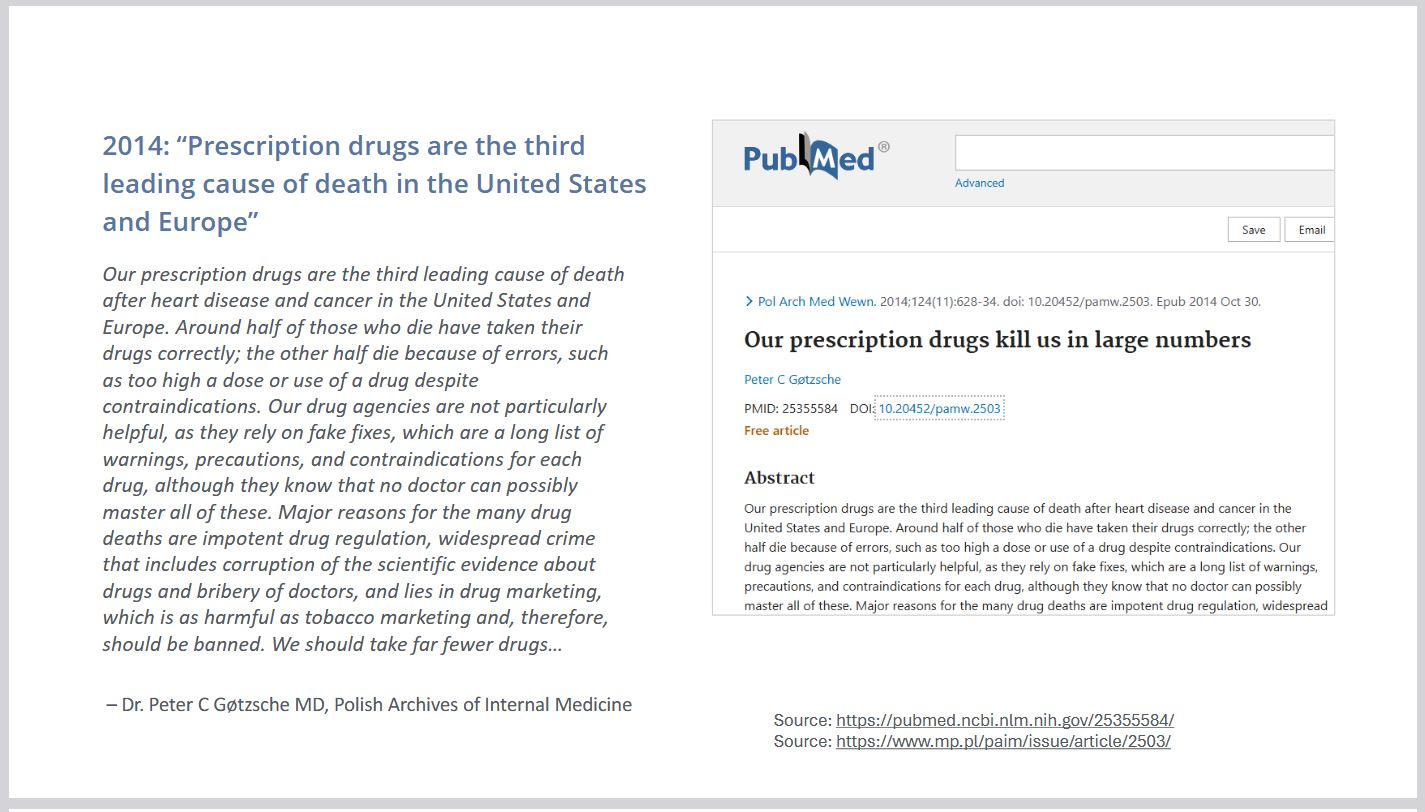
In 2014, Dr. Peter Gøtzsche MD reported prescription drugs were the third leading cause of death in the U.S. and Europe.
In 2024, Dr. Peter Gøtzsche MD reported prescription drugs are the leading cause of death.
In 2025, it was reported that 250,000 deaths per year are caused by prescription drugs.
In 2007, in a controlled trial with disabled elderly adults, doing nothing except terminating some of their prescriptions dropped the death rate by 53% compared to the control.
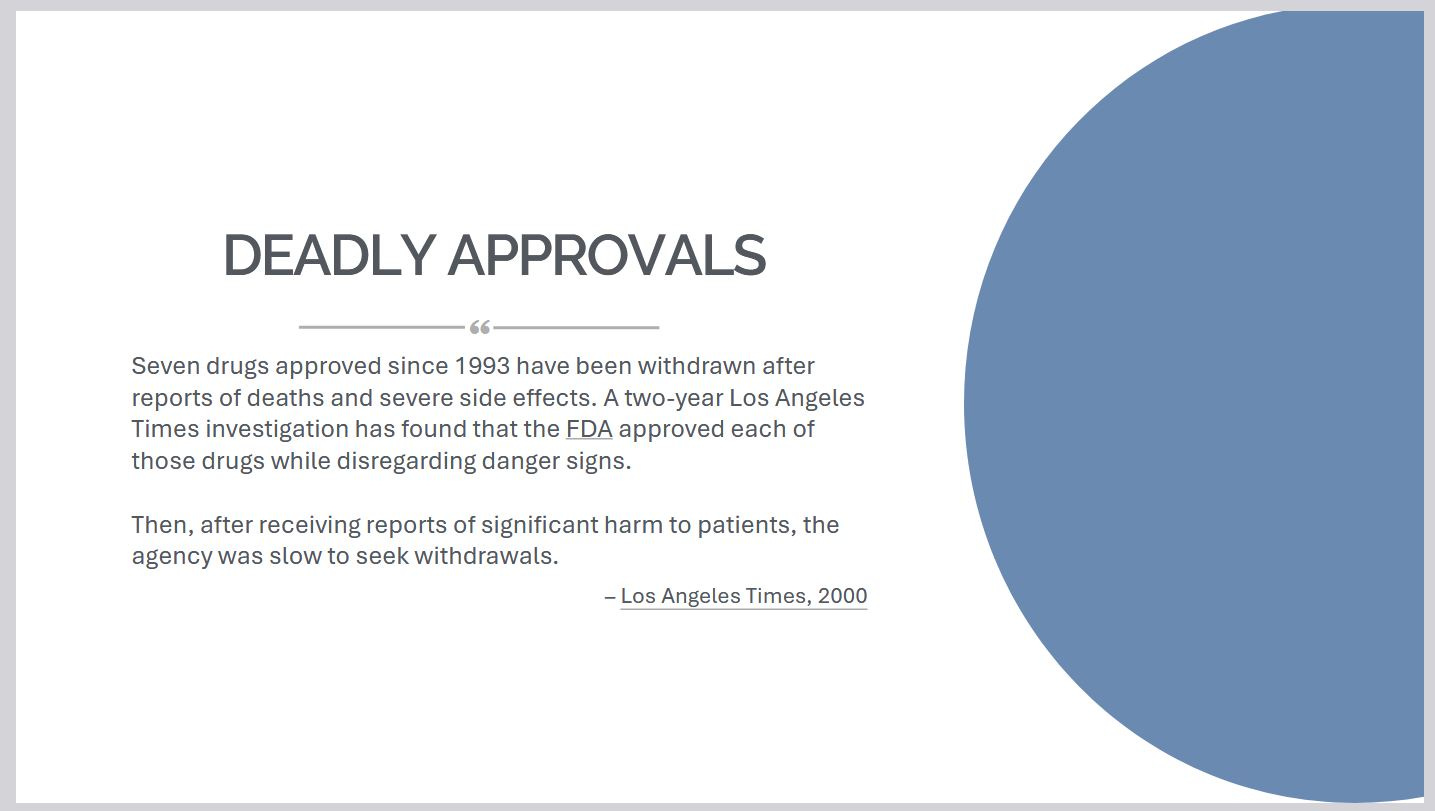
In 1993, the FDA implemented a faster drug approval process. By 2000, it had withdrawn seven drugs that it recently approved due to reports of deaths and severe side effects.
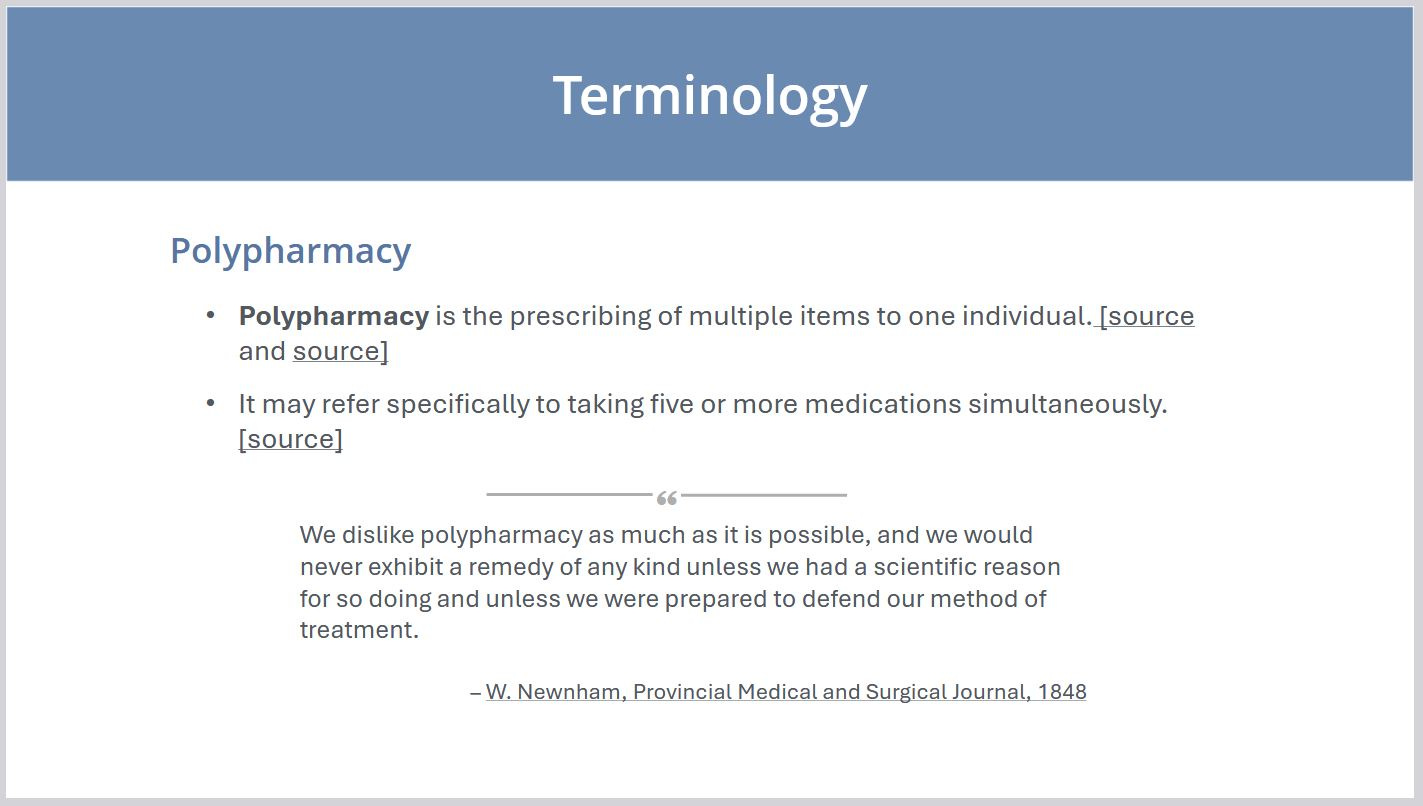
Overprescripton, Polypharmacy
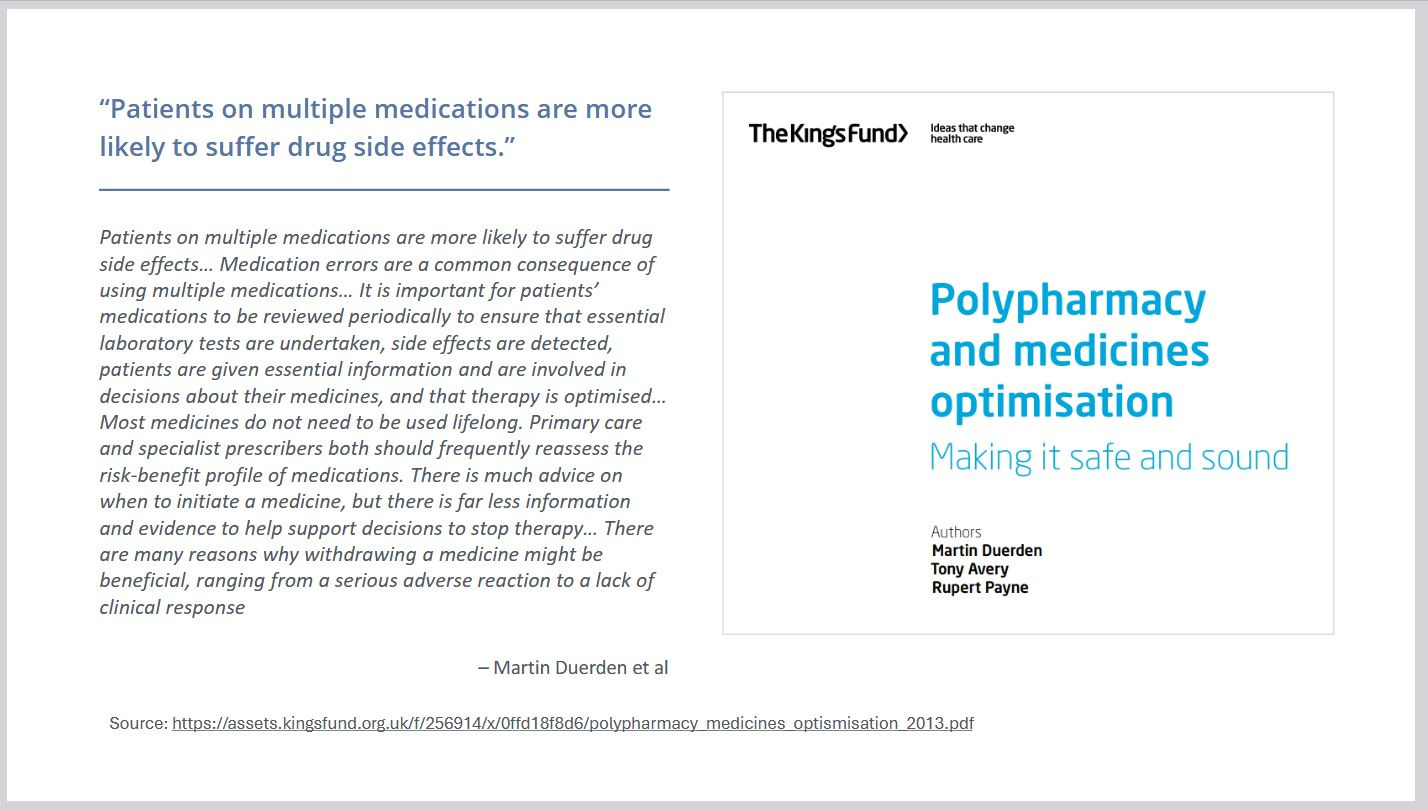
“Patients on multiple medications are more likely to suffer drug side effects.”
“Studies have shown that the number of drugs used by a patient strongly influences the risk for adverse drug events owing to an increased risk for inappropriate prescribing, drug-drug interaction, and drug-disease interaction.” [JAMA]
The rate of adverse drug reactions increases exponentially after a patient is on 4 or more medications.
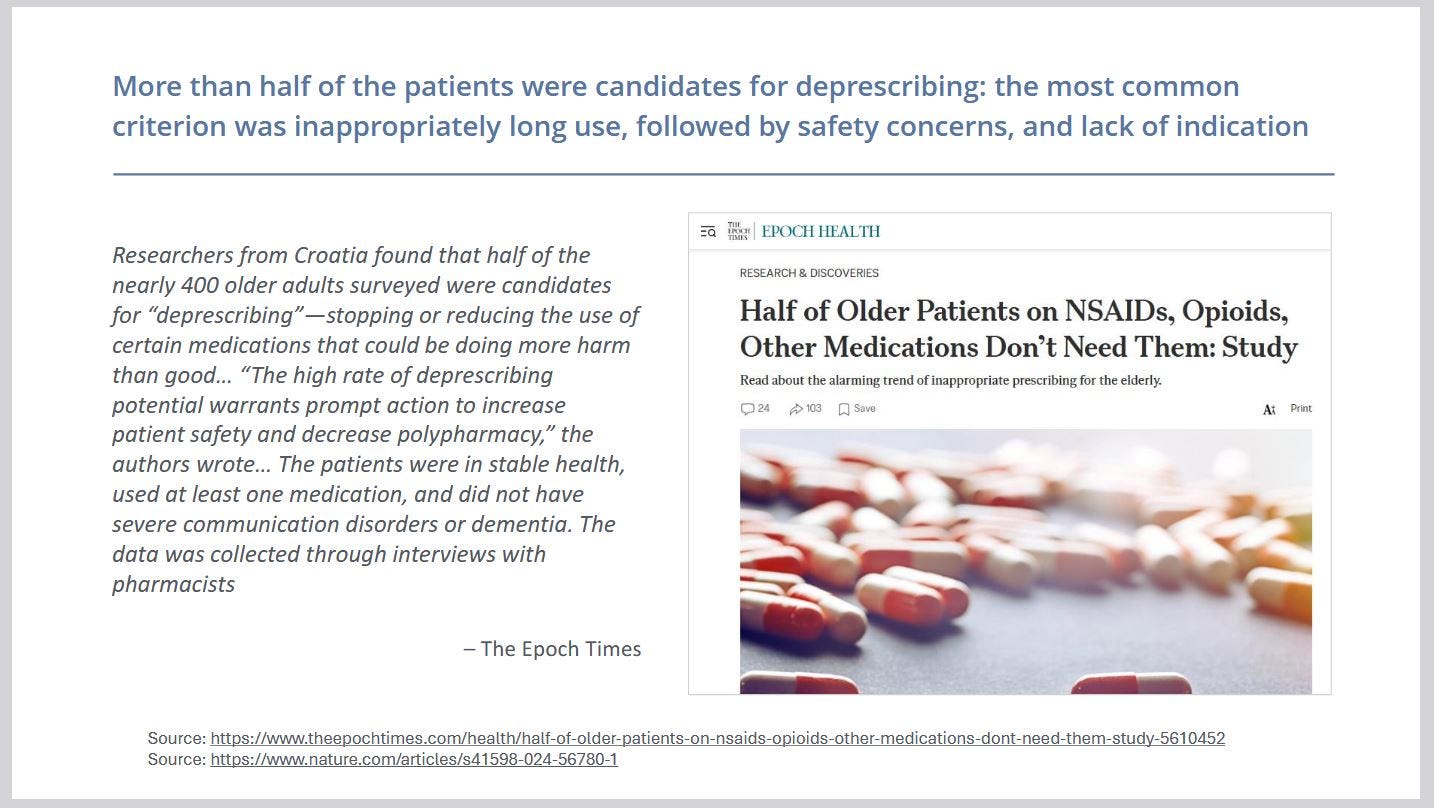
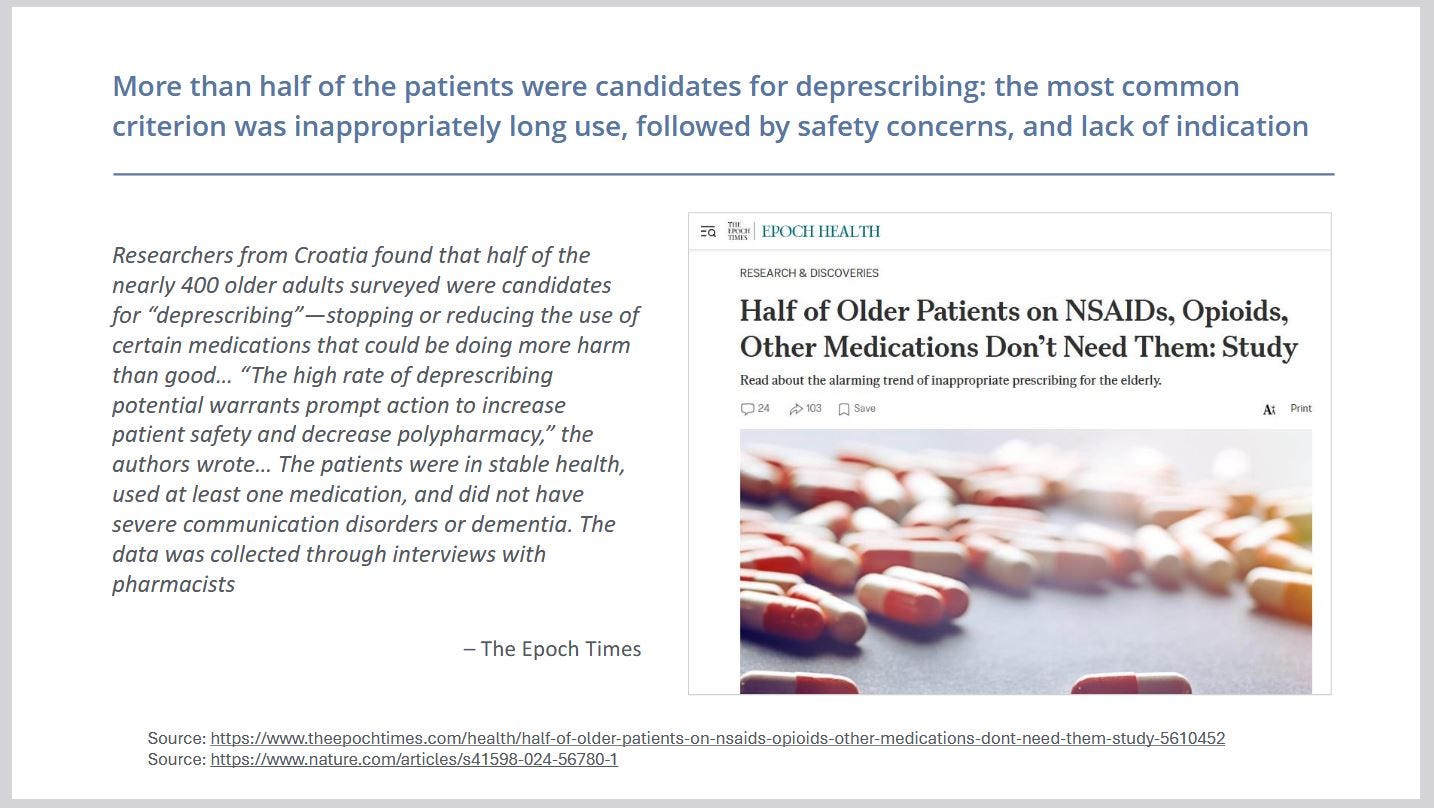
“More than half of the patients were candidates for deprescribing. The most common criterion was inappropriately long use, followed by safety concerns, and lack of indication.”
“Timely action towards reducing the use of commonly prescribed potentially inappropriate medications is needed to increase patient safety.” [Scientific Reports, Nature]
Overprescription in assisted living facilities: “This has got to stop!”
“The rate of drug-related problems and inappropriate medication use in the elderly is disturbing… The problem is even greater in nursing home and nursing department settings, and the financial consequences are enormous.”
It’s business as usual to put children, with their developing brains and bodies, on “cocktails of powerful psychotropic drugs.”
Harms, Addiction from Treatments Generally
“One-third of new drugs had safety problems after FDA approval.” [NPR]
Common effects from prescription drugs include confusion, hallucinations, fainting, blurred vision, depression, and sexual problems.
Drugs cause nutrient deficiency in a number of ways, such as inhibiting nutrient absorption or flushing them out from increased urination.
Dr. Vernon Coleman was warning of prescription drug dangers in 1975.
“It’s easier to get off heroin than psych drugs.”
“Pharmaceutical companies have hidden from both doctors and patients the dangerous side effects, addictive nature and long-term harm [from commonly prescribed psychiatric drugs].”
In a study of 1,829 antidepressant users, three out of four tried to quit — and 70% of them were unable to do so because withdrawal symptoms were too severe.
Doctors prescribe severely addictive drugs, parroting industry propaganda that withdrawal symptoms are mild and short-lived.
“Nationwide drug recall: Injectables mislabeled, may result in overdose and death.”
Long term effectiveness and harms from surgeries are rarely acknowledged.
Free Samples

Context: Conventional (Allopathic) Medicine Problems

These curations will help you more fully appreciate why your work is so vital for helping people regain their health.
Failed Health Outcomes — The U.S. spends nearly twice the per-capita amount on healthcare than the next highest spender, yet Americans are the most chronically ill, and rank 48th in life expectancy, among other countries. In addition, medical misdiagnosis causes permanent harm and death to 795,000 people every year.
Verifiably Corrupt — Establishment medicine as a system* is verifiably corrupt, serving the interests of industry — not health. (*Obviously, not every individual working in establishment medicine is unethical. Rather, the system that educated / indoctrinated them, and that sets policy, hires, pays, and promotes them is verifiably corrupted.)
Big Pharma & Biotech: Immoral Business Model — Corporations, by design, are beholden to profit above all else, acting as powerful entities that are “essentially psychopathic and without conscience.” Pharmaceutical and biotech companies are the utmost example of corporate psychopathy, demonstrating inhumanity in response to human suffering.
Regulatory & Professional Betrayal — Government agencies entrusted to regulate the field of medicine fail to do so. The majority of influential professional organizations such as the American Medical Association are corrupted by industry.
Not Evidence/Science-Based — The bulk of establishment medicine’s standard of care is not based on unbiased, reproducible science. (We prove it here.)
Harms by Drug and Diagnostic — Establishment medicine providers routinely utilize diagnostic testing and “treatments” that cause harm (“adverse”, “side” effects). Get verifiable evidence of the harms, organized by drug, treatment, or test (mammograms, CT scans, antibiotics, statins, benzos, etc).
Failed Philosophy & Strategies — Allopathic medicine (also called conventional medicine, Western medicine, and Rockefeller medicine) was created to exploit the profit potential of drug patents. Born from a compromised report published in 1910, this system does not acknowledge the conditions under which the human body creates health, nor does it seek to identify and resolve the root causes of illness. On the contrary, it suppresses symptoms with drugs, creating more symptoms and distracting efforts from true healing. Diagnosis is disconnected from the wisdom inherent in the purpose and message of symptoms.
What’s the Impact from Creating More than 90,000 Diagnoses? — Establishment medicine’s diagnosis system (the ICD-10-CM) is 22 chapters and 288 sections, with more than 90,000 possible diagnoses. The U.S. Dept of Health & Human Services takes another 115 pages to document accompanying rules. Naming constellations of symptoms vs. identifying root causes: how has it impacted health?
Solutions
Beyond Diagnosis: Healing Principles — Key issues that underlie most disease and healing principles that are consistently and verifiably effective.
Root Cause Index — In this vast curation of evidence, we cite hundreds of research papers on the root causes of diseases.
Health Systems & Techniques — We bring together 20 systems of medicine + nearly 200 health and wellness techniques, structuring the material in an organized way for efficient research.
Diseases & Conditions Glossary — A succinct glossary and resource links for more than 150 terms used in discussing health issues, conditions and diseases.
Member Access
Non-members, see the store for PDF versions of the materials discussed above.
Members, here are a number of ways to view the research summaries and slides:
Online viewing — All members have access to all research summaries, including quick link to all original sources. Navigate from the Research Hub, Pharmaceuticals Hub, or Study Library.
Customizable PowerPoint files or PDF handouts for distribution — See the Download Library
Associate and Trainer Members — In the Download Library, see Presentation Slides
Provider and Teacher Members — For downloadable PDFs, credit packs are available as an add-on purchase as low as $3 per credit. Slide decks require 3 credits.
Membership as low as $19/month

Empowering wellness providers, coaches, yoga teachers, trainers, and health educators as they step into their next level of leadership and service.
Wellness Resource Center and Yoga Teacher Central have supported teachers and wellness providers since 2012, continually expanding our tools and resources to meet the needs of a changing world.
As the world undergoes rapid change—including systemic breakdown and the rise of AI—we bring together practical knowledge and supportive community to meet the moment. Everything we offer is designed to help you stay aligned, resourced, and grounded as you care for others.
What Members Get
A blend of knowledge work and community support tailored to your unique needs.
Personalized support to focus your efforts, maximize your time, and amplify your impact.
Evidence-based resources, delivered in context and designed for real-world application.
A flexible knowledge base with guided pathways to support your evolving learning and service goals.
Practical support for workshop and training development, including content, lecture notes, and handouts.
A collaborative, values-aligned community for meaningful connection, inspiration, and learning.
Also available: customizable content you can distribute as your own —for trainings, courses, workshops, series, presentations, and consultations.
We’re thoughtful and analytical, but heart-led in everything we do. Empowerment is the center of our work. You empower others—and we’re here to empower you.
Our Associate memberships provide something rare: carefully crafted, high-quality content you can adapt, personalize, and offer as your own.
How can we help you today?
Verifiable research on evidence-based therapies and leading-edge tools? Check.
Focused support that helps providers contextualize and individualize their services? Check.
Curricula for trainings, workshops, coaching, and client consultations? Check.
Customizable content you can share as your own—without paying distribution royalties? Yes, even that!
Packages & Pricing
Select from two membership tracks:
Take the Lead (provider and teacher support) — Evidence-based education, research, and resources to support planning and preparation for teaching, coaching, and consulting. Pricing starts at $19/month with an annual commitment. Installment pay and shorter-duration memberships are available at slightly higher monthly rates.
Associate (customizable content for trainers, consultants, educators) — Provider membership plus customizable content and lifelong, royalty-free distribution rights for trainings, courses, workshops, series, presentations, and consultations. Scaled pricing and a flexible credit system give you complete freedom to select exactly what you need from more than 500 subjects. Pricing as low as $400 for content and lifelong distribution rights.